
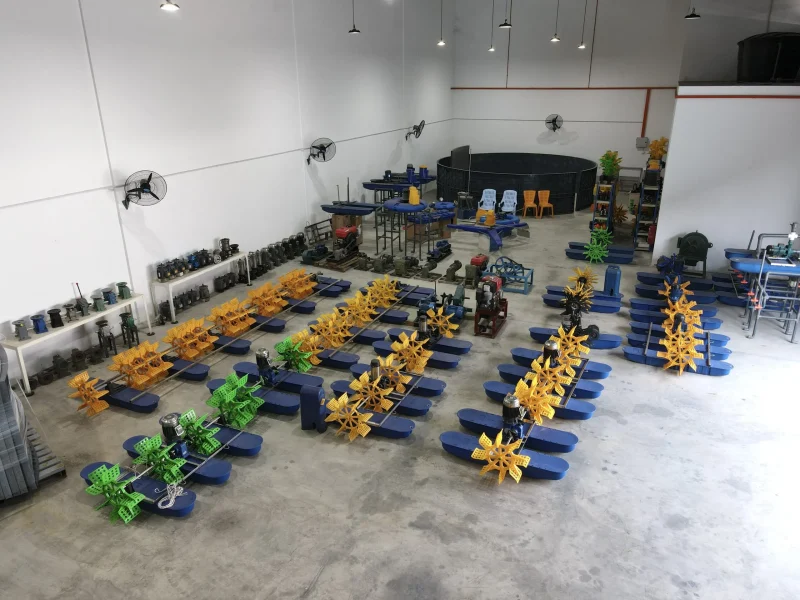
How can one choose the right type of aerator for their fish pond?

| Type | Advantages | Disadvantages |
| Paddlewheel Aerator | 1. Strong water-circulation capability, can improve thermal stratification; | 1. Relatively high energy consumption; |
| 2. Suitable for medium-to-large open pond farms; | 2. Weak oxygenation at the bottom layer; | |
| 3. Provides both aeration and oxygenation | 3. Noisy operation | |
| Impeller Aerator | 1. High oxygenation efficiency, suitable for high-density farming; | 1. Causes significant water turbulence, may harm juvenile stock; |
| 2. Breaks surface film and accelerates oxygen dissolution | 2. Limited improvement in bottom-layer dissolved oxygen; | |
| 3. Requires fixed installation, low mobility | ||
| Micro‑pore (Diffused) Aerator | 1. Excellent bottom-layer oxygenation with uniform dissolved oxygen distribution; | 1. Weak water‑circulation capability, needs supplementary mixing devices; |
| 2. Low energy consumption, quiet operation; | 2. Tubing is prone to clogging, leading to high maintenance costs; | |
| 3. Ideal for bottom-dwelling species such as shrimp and crabs | 3. Low surface‑layer oxygenation efficiency |
Three oxygenation machine usage schemes (taking pond farming as an example)
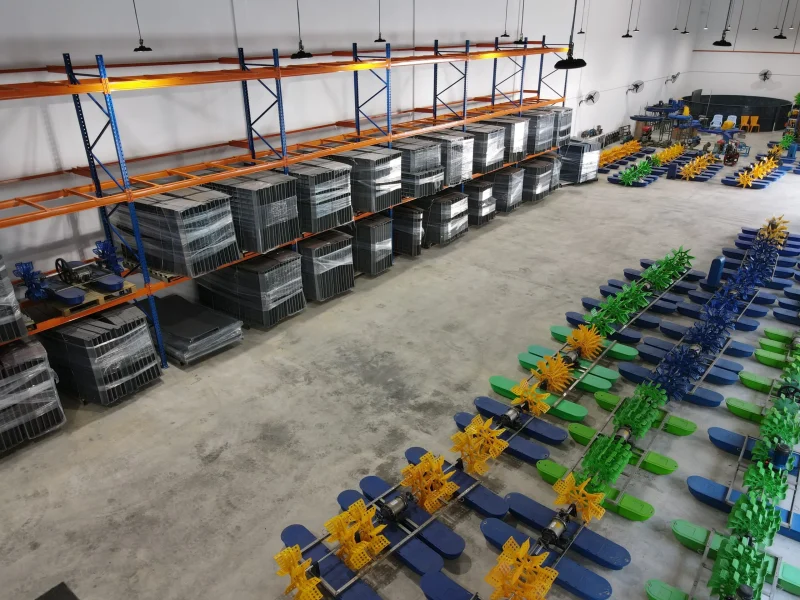
Core pairing logic: “Micro-perforated oxygenation machine as the base + Impeller / Waterwheel oxygenation machine as the reinforcement”, balancing both bottom oxygenation and water circulation. Specific scene combinations:
High-density fish and shrimp mixed farming pond:
Micro-perforated oxygenation machine is fully laid out (satisfying the basic oxygenation at the bottom) + Impeller oxygenation machine (high-intensity oxygenation during high temperature / feeding period) + Waterwheel oxygenation machine (pushing water flow in the corner areas to avoid stagnant water).
Bottom-cultured shrimp and crabs ponds:
Micro-perforated oxygenation machine is the main choice (ensuring the oxygenation of the habitat area) + Waterwheel oxygenation machine (regularly stirring the water body to prevent stratification).
Small ponds / breeding ponds:
Micro-perforated oxygenation machine (precise oxygenation, avoiding fish injury) + Small Impeller oxygenation machine (emergency use to quickly increase overall oxygenation).
When choosing an oxygenation machine suitable for fish ponds, the core is to match the farming scenario and requirements. You can gradually filter through the following 4 key dimensions:
1. Prioritize the type of fish and the density of farming
Bottom species (shrimp, crabs, yellow catfish): Prefer micro-perforated oxygenation machine (uniform bottom oxygenation, avoiding fish injury);
Middle and upper-layer species (grass carp, tilapia): Can choose impeller oxygenation machine (high oxygenation efficiency, suitable for high density);
Mixed farming ponds: Recommend “micro-perforated + impeller / waterwheel” combination (balancing bottom and overall oxygenation).
2. Combine with fish pond environmental parameters
Area and water depth: Large and open fish ponds (≥5 mu) choose waterwheel oxygenation machine (strong water flow push, improving water body stratification); Small ponds (≤3 mu) or deep ponds (≥3 meters) choose micro-perforated oxygenation machine (low energy consumption, deep oxygen penetration);
Water source and water quality: In ponds with turbid water and high organic matter, avoid micro-perforated (easily clogged), prioritize impeller or waterwheel.
3. Consider usage scenarios and budget
Daily oxygenation: Choose low-energy consumption micro-perforated oxygenation machine (low long-term usage cost);
Emergency oxygenation (high temperature, before thunderstorms): Choose an impeller oxygenation machine (fast oxygenation speed, quick emergency response);
Budget limited: Entry-level choose impeller oxygenation machine (high cost-performance); Pursue efficient and energy-saving choose micro-perforated + solar power supply combination.
4. Auxiliary reference for installation and maintenance difficulty
Ponds with complex terrain and inconvenient fixation: Choose mobile waterwheel oxygenation machine;
Limited manpower: Avoid micro-perforated oxygenation machine (pipes need regular cleaning), prioritize impeller oxygenation machine (simple maintenance).